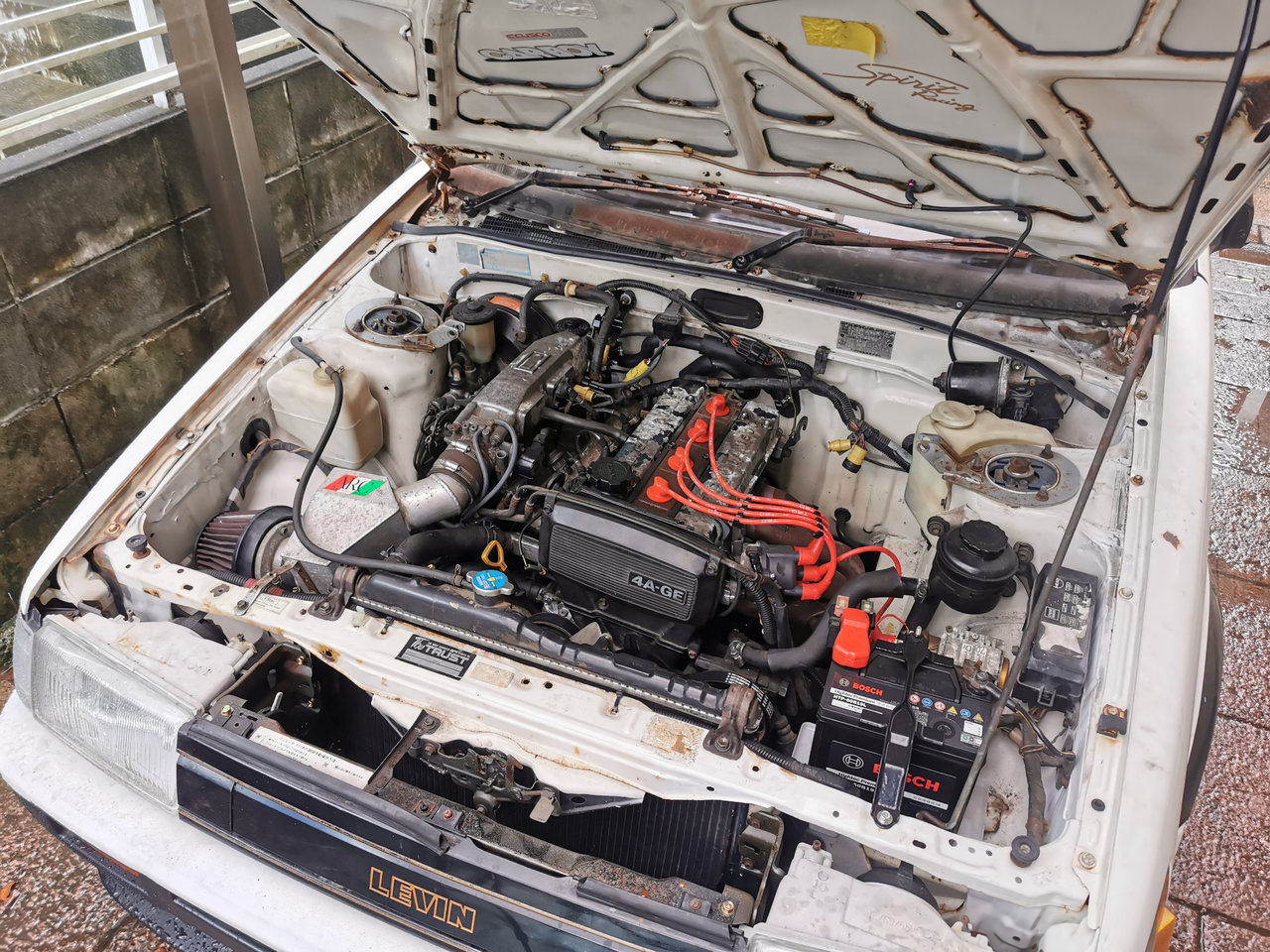
After my Levin finally passed inspection, and the issue with the leaking clutch was fixed, a friend an I went on a drive to Yokosuka, to eat some American burritos and enjoy the seaside. The 4A-GE engine in my AE86 ran well, and pulled strongly. On the way home, I noticed some slight smell of burned oil, but not a worrying amount: the car wasn’t even smoking, so I thought this may be the exhaust warming up for the first time in a long time. I drove home, parked the car, and went to bed.
The next day, I wanted to start the car, but it failed. The starter was just turning the engine over. After lots of cranking, it briefly ran, but only on two cylinders, and died almost immediately.
I first checked the fuel supply and ignition, but couldn’t find any issues. However, when I span the engine over by hand, I noticed that it turned over surprisingly easy – that’s when I realized something more severe had happened. A compression test confirmed this:
Cylinder 1: 13 bar, cylinder 2: 13 bar, cylinder 3: 0 bar, cylinder 4: 11 bar.
The reason was found after opening the valve covers.
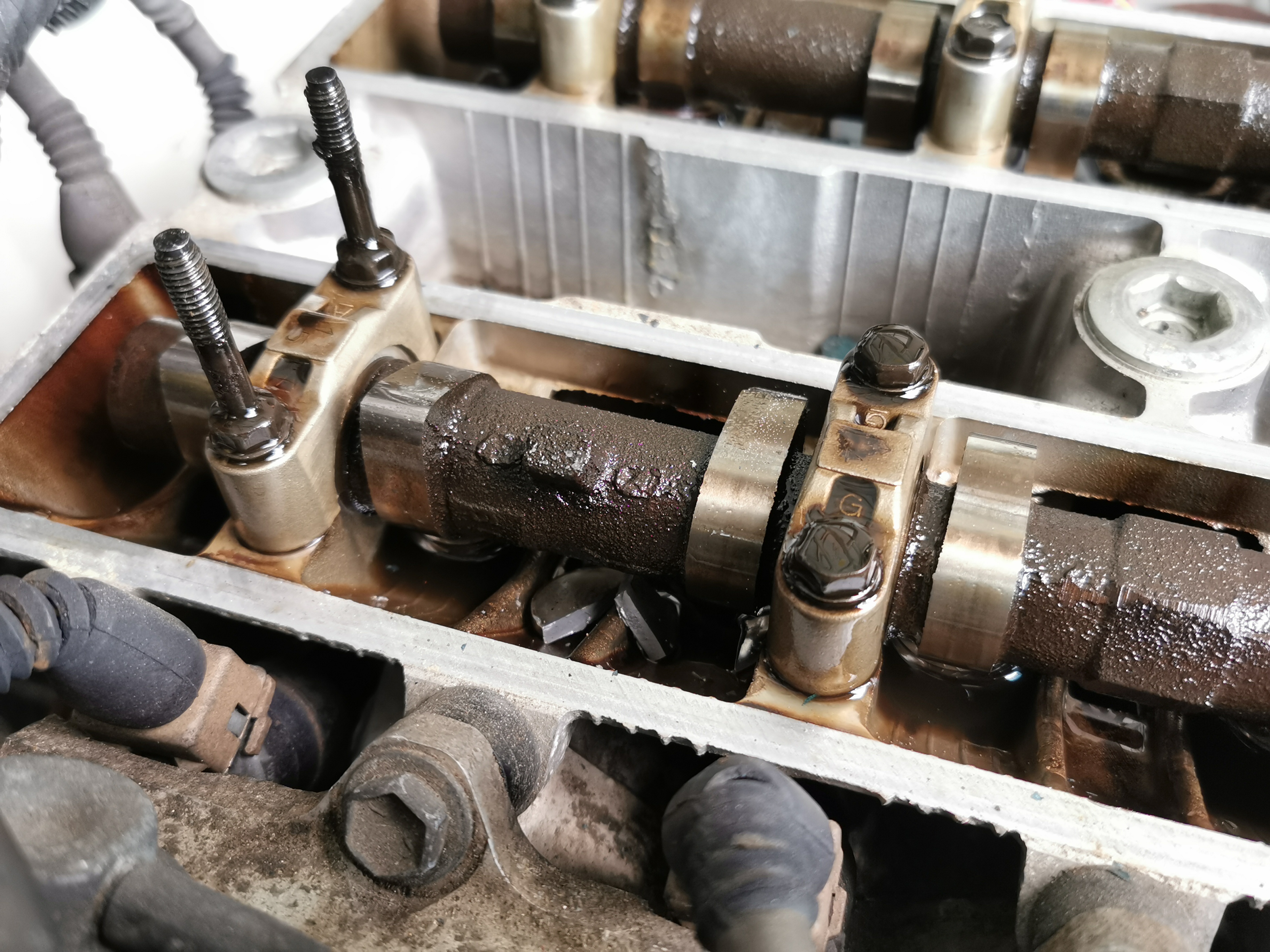
A valve shim on the intake valve had disintegrated.
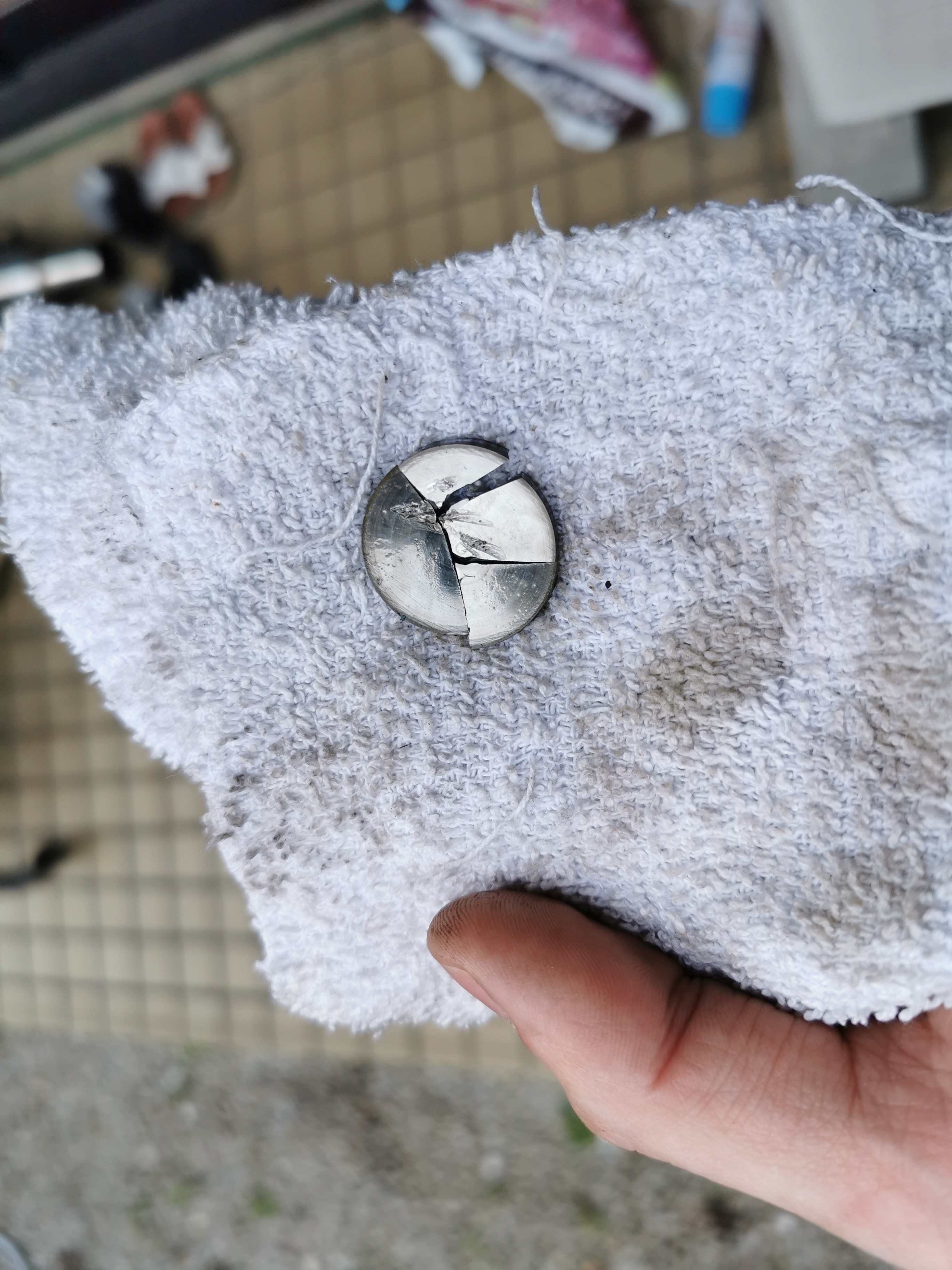
The camshaft is unusable:
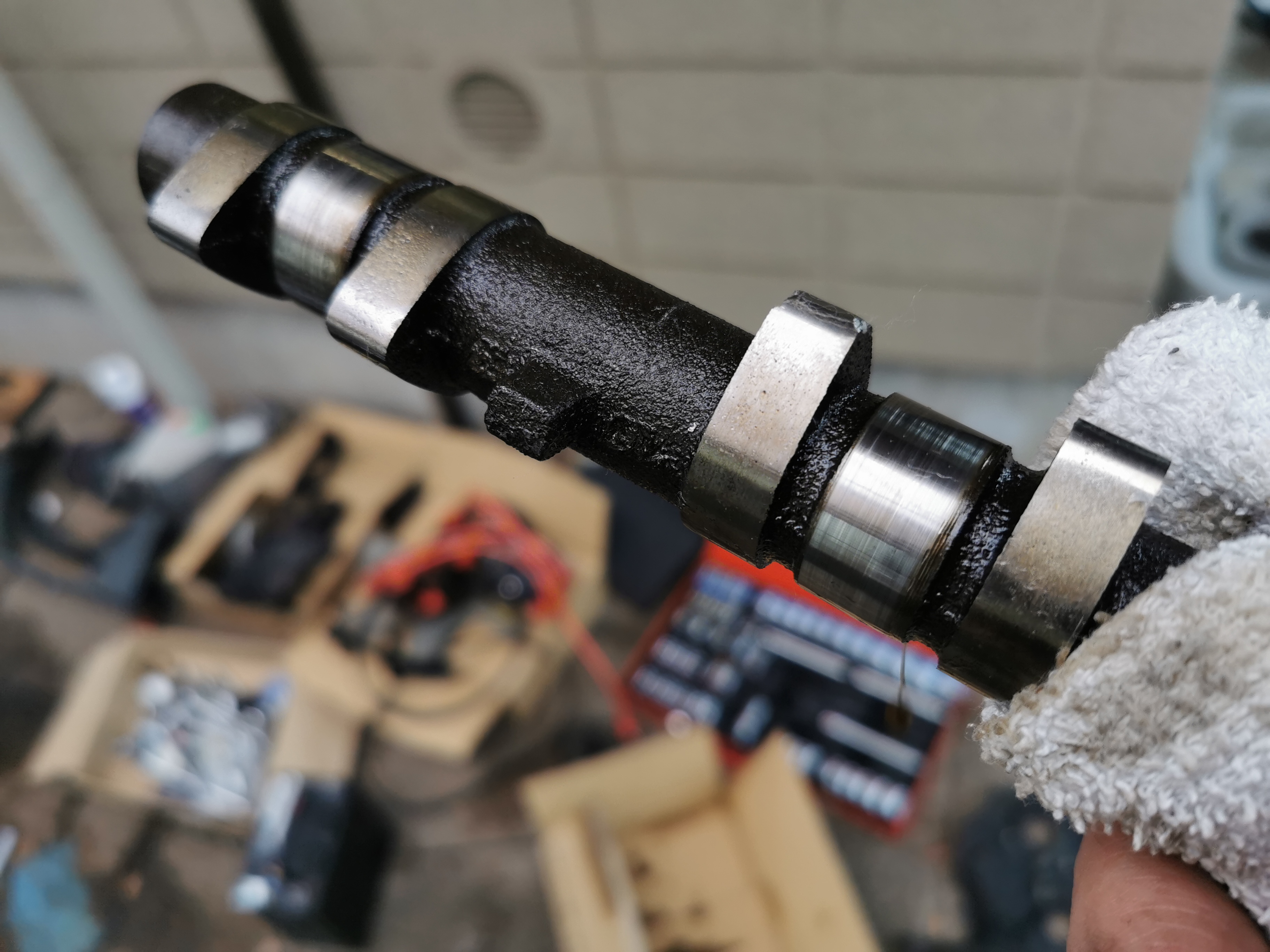
The cylinder had look bad, too, although I was able to repair it later.
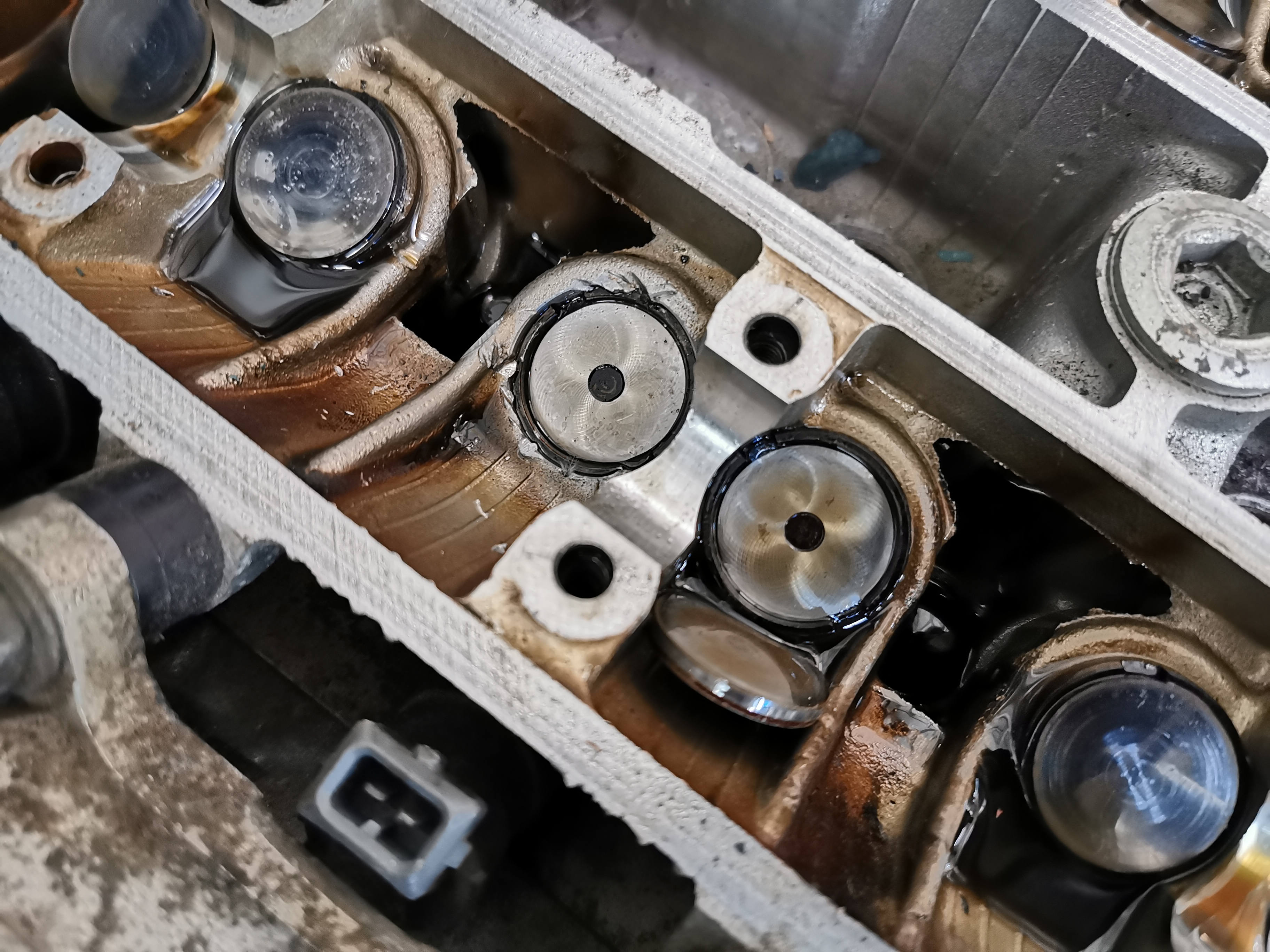
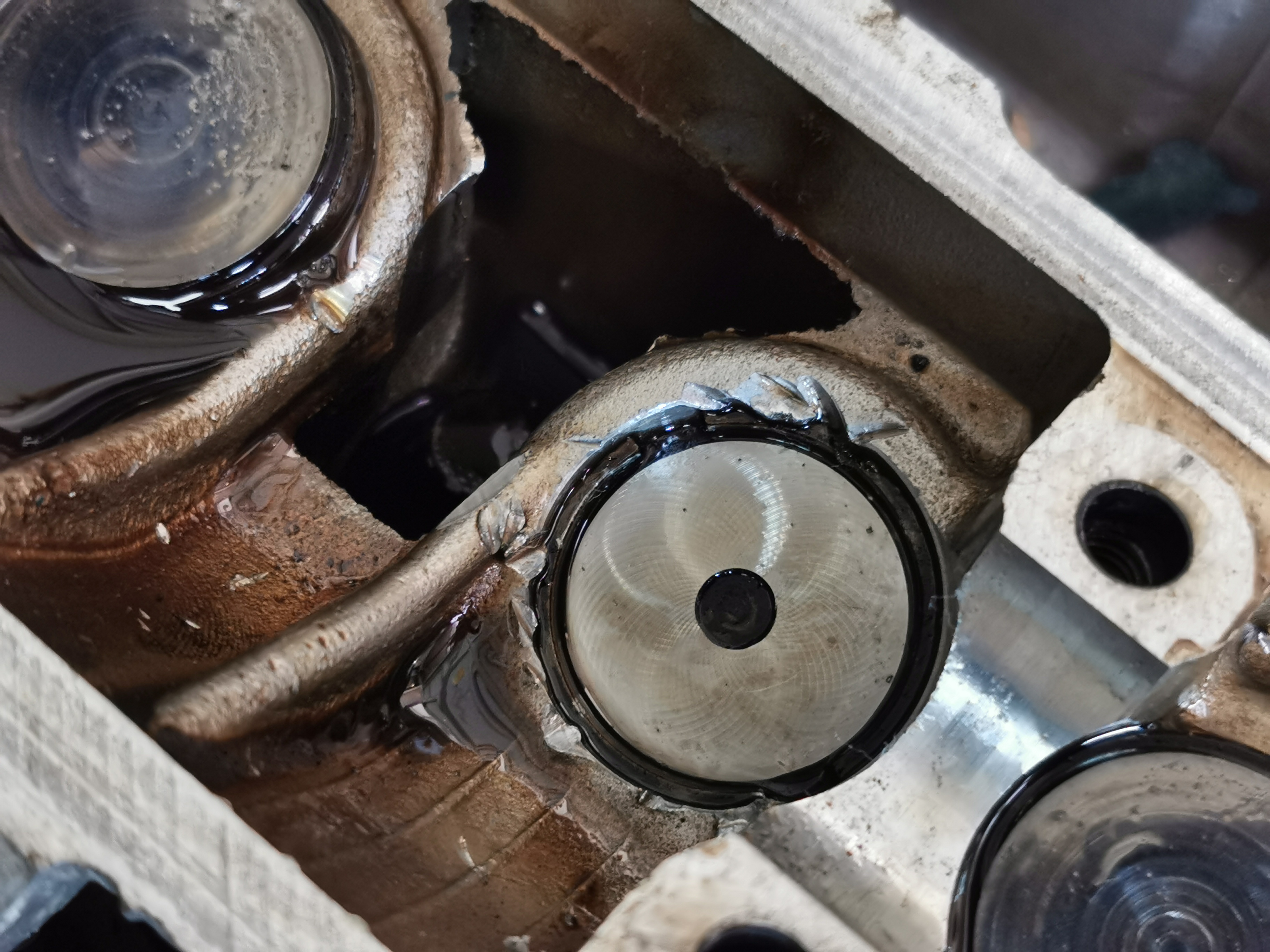
Due to damage in the lifter and the cylinder head, the valve was stuck in this position. I had to use a grinder to remove the damaged metal of the cylinder head before I was able to close the valve again.
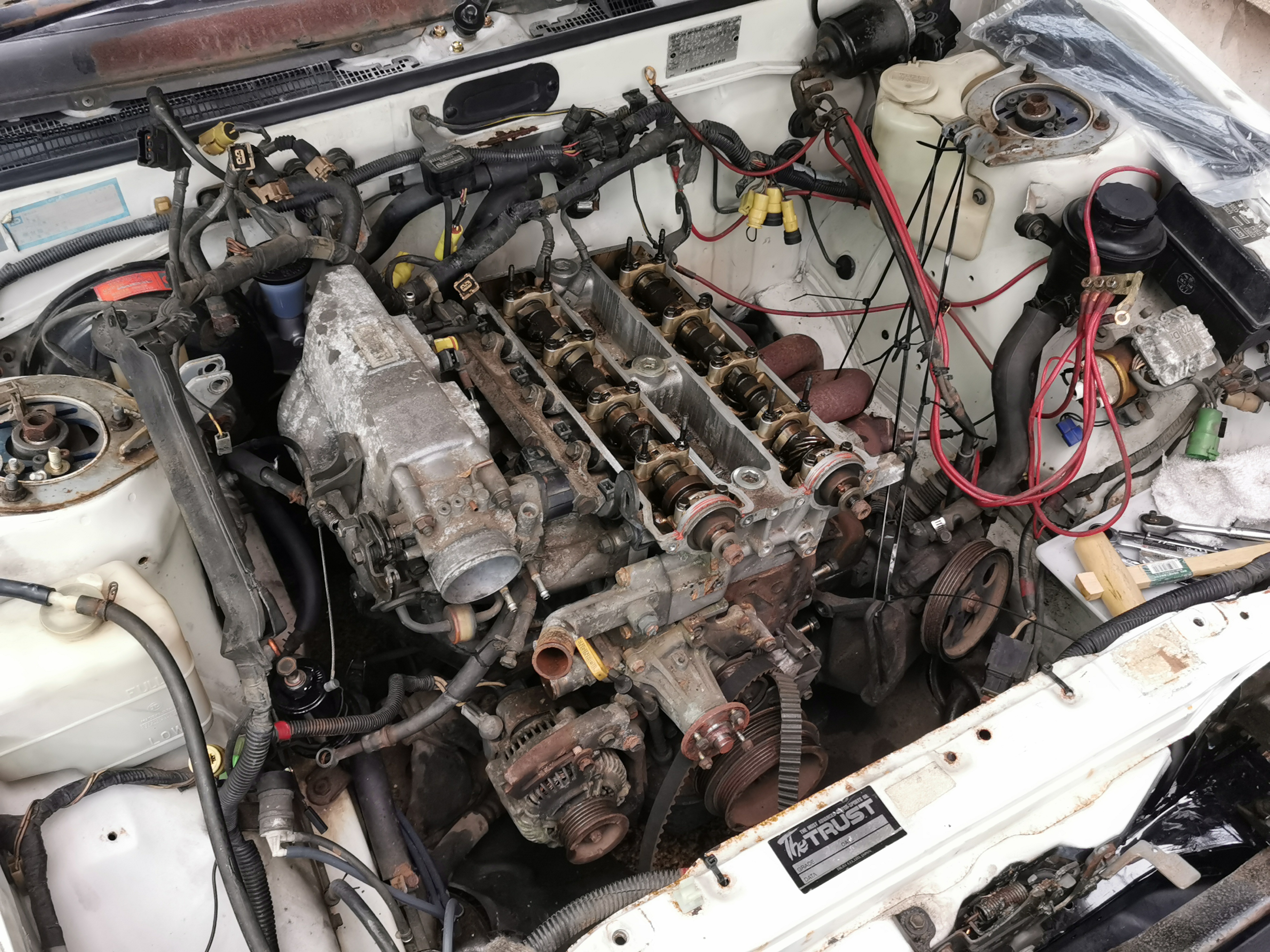
That is pretty frustrating.
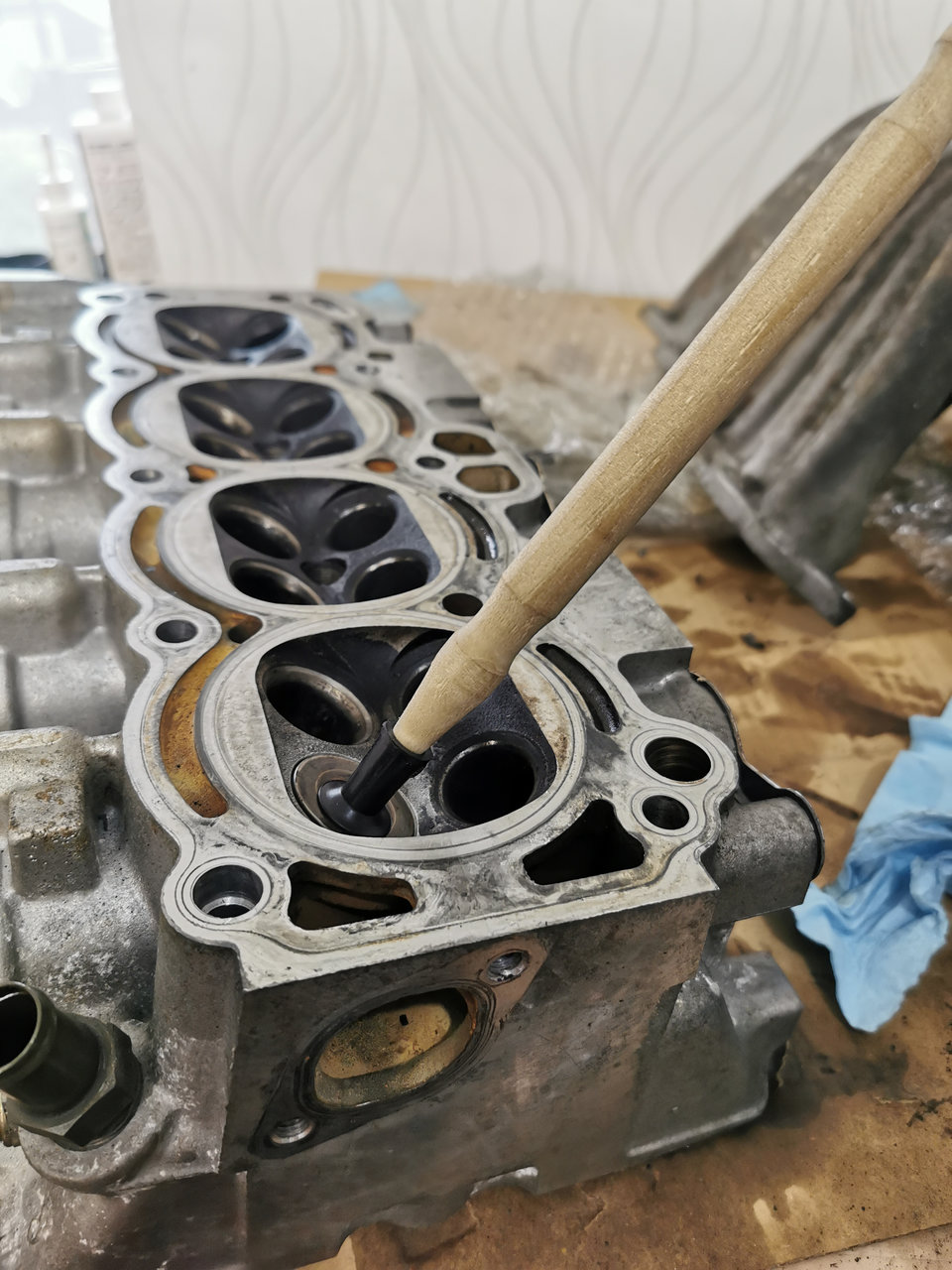
After disassembling the cylinder head, I found out that the intake valve was stuck in the valve stem due to oil residue. Gummed up oil has seized the valve, and the valve spring was too weak to pull the valve back to the closed position. I even had to use a hammer to remove the valve from the cylinder head.
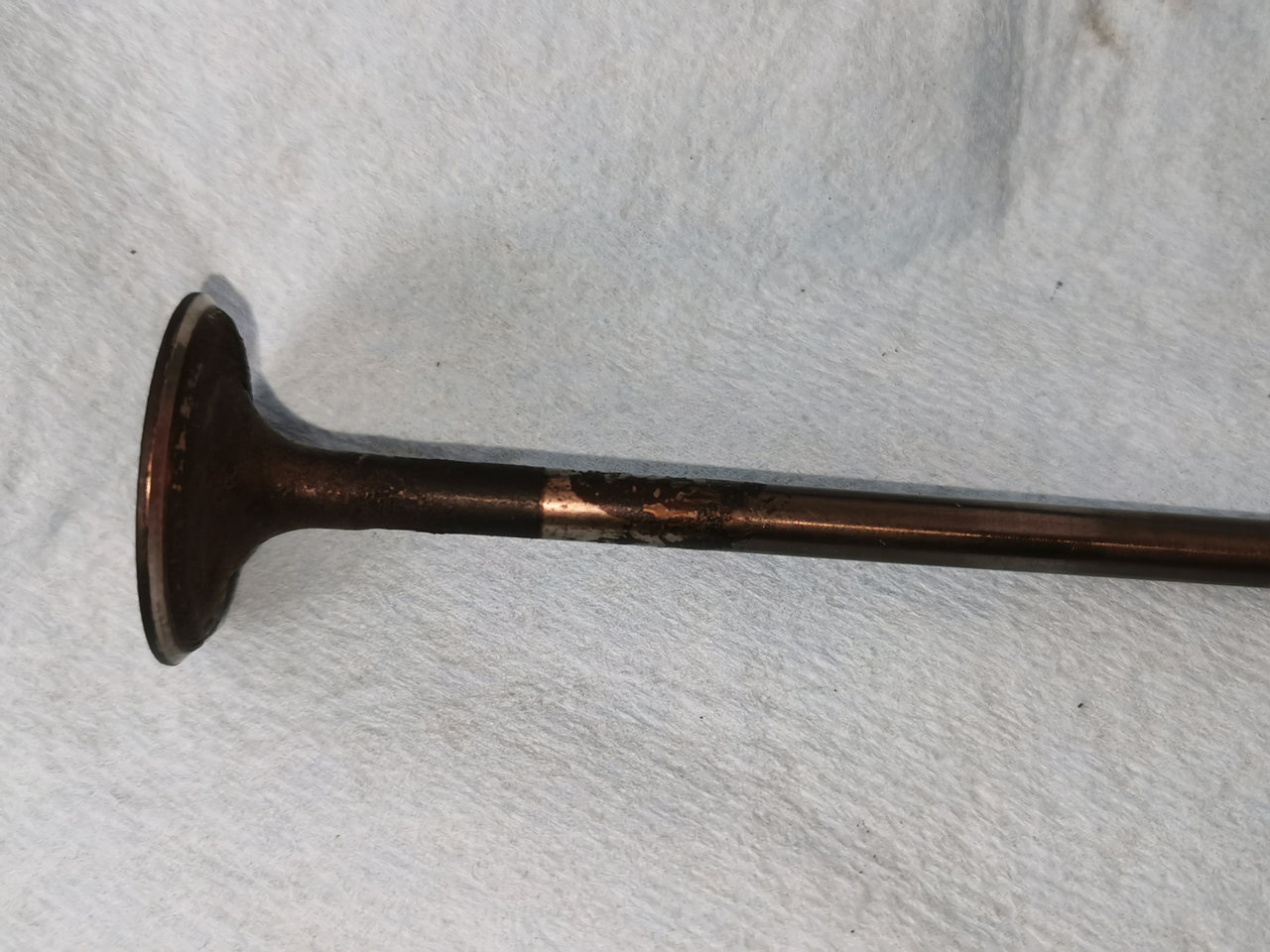
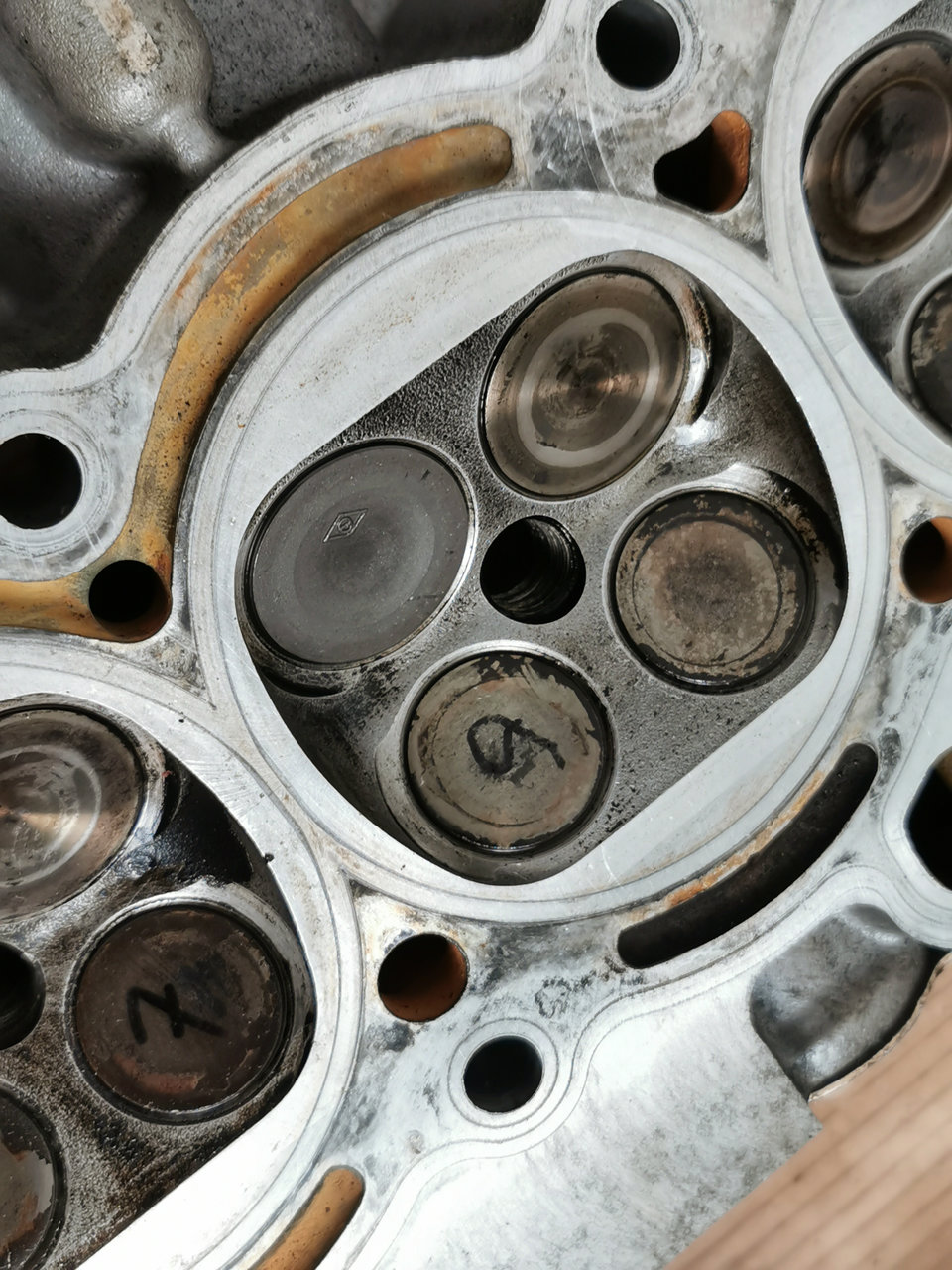
The 4A-GE is a non-interfering engine. Unfortunately, this doesn’t apply if the valve shim disintegrates and metal chunks push your valve open further than designed. As a consequence, the piston had a imprint of the valve head shape.
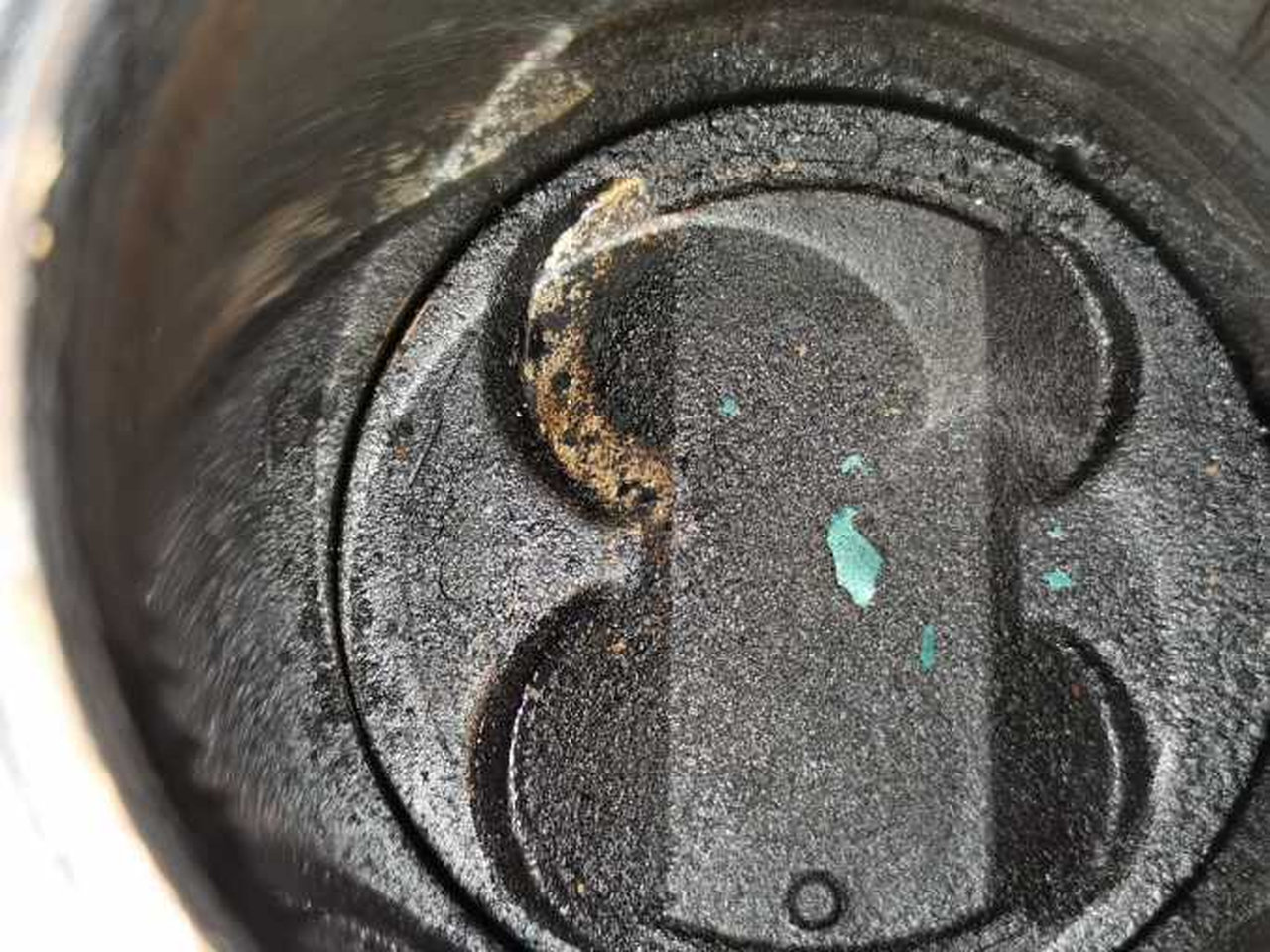
The valve had to be replaced.
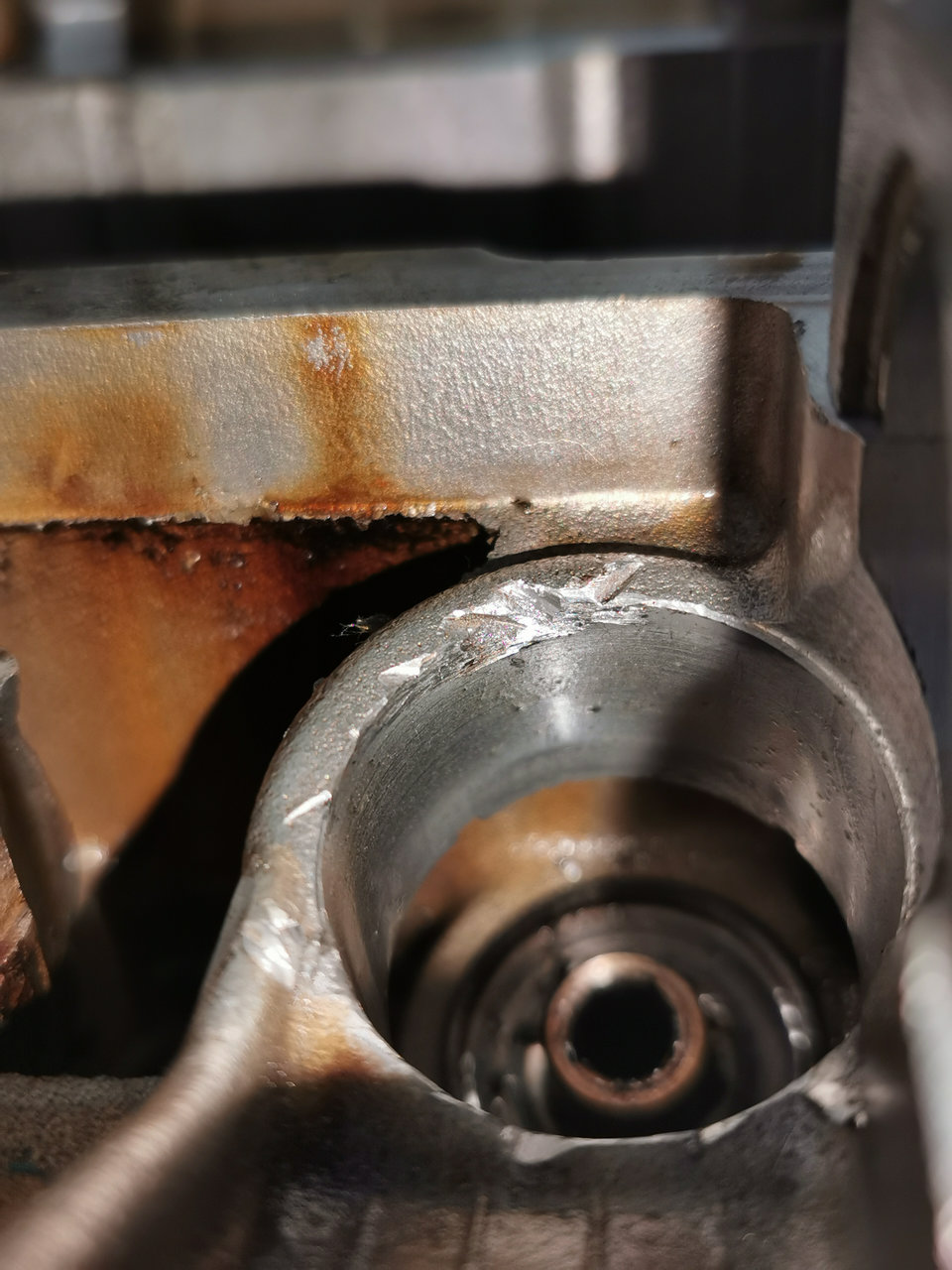
I repaired the engine by replacing the failed valve and lifter. The cylinder head was repaired by carefully grinding off the damaged aluminum, and using sandpaper to smoothen the rough edges. I took the opportunity to replace all valve stem seals and seat the valves.
For the damaged camshaft, I bought a 400 Yen (~2 USD) used replacement part of Yahoo Auctions, which turned out to be in perfect condition.
Eventually, the engine was a runner again.
What causes this issue? The oil gunk deposited on the valve originated from the intake. Hot oil (probably from the PCV) must have collected on the intake valves and stayed there for many years, turning into oil sludge. This probably happened while the AE86 was parked for ~8 years. My guess is that the last owner drove it really hard before giving it away, assuming that it will never be used again.
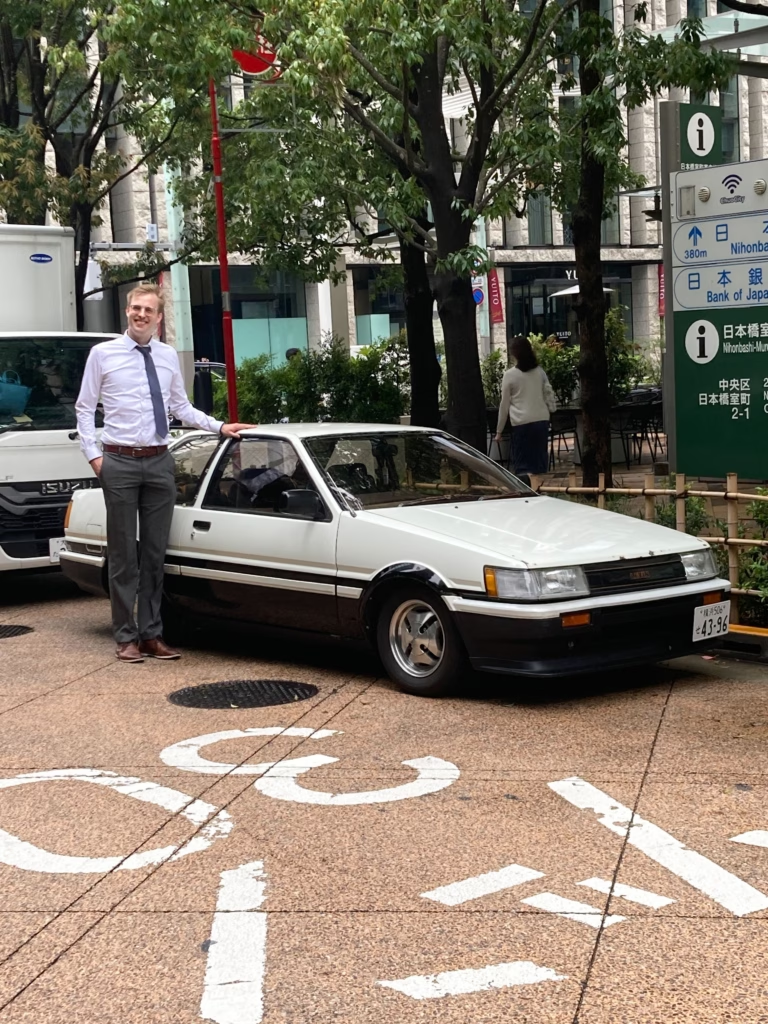
I’ve never heard about this kind of engine failure before, so this felt unusual. To me, it was an interesting learning that oil catch tanks actually do make sense: I plan to buy one asap. For the rest, don’t worry: my AE86 Levin is back on the road with the same engine (plus one brand new valve) and is a runner again.